
Skincare Tips & Expert Advice for Women of Color
— Serving Tucker, Stone Mountain, Decatur, and Metro Atlanta.
Welcome to the Crystal Ngozi Beauty & Esthetics Blog — your go-to resource for honest, expert skincare advice written specifically for women of color. Whether you're battling stubborn acne, trying to fade hyperpigmentation, navigating hormonal skin changes, or simply ready to invest in your glow, you'll find evidence-based guidance, treatment breakdowns, and real answers here — no fluff, no one-size-fits-all advice. We're based in Tucker, Georgia and proudly serve women across the Atlanta metro area. Every post is written with melanin-rich skin in mind, because your skin deserves expertise that actually understands it.
Ready to go deeper?
Book a skin consultation and let's build a plan that's made for you.
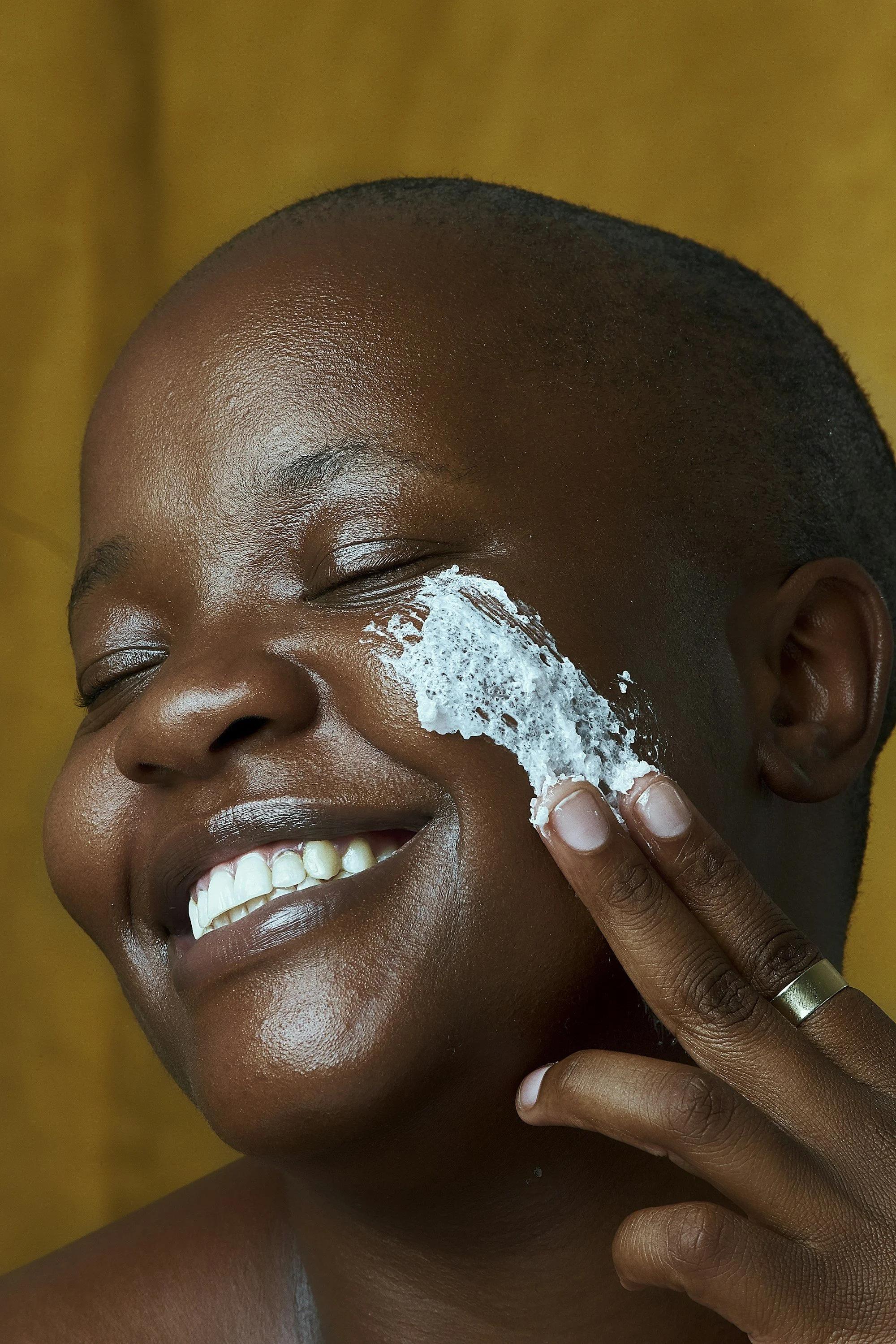
Retinol for Melanin-Rich Skin: A Beginner's Guide to Starting This Fall
Retinol for Melanin-Rich Skin: Fall Starter Guide
Retinol has a complicated reputation in melanin-rich skin communities. Half the conversations you'll find online treat it as essential; the other half are warning stories about breakouts, peeling, and dark spots that took months to fade. Both reactions come from real experiences — but more often than not, the bad ones trace back to starting too fast, choosing the wrong strength, or skipping the barrier-support steps that matter more for deeper skin tones than lighter ones.
If you've been curious about retinol but hesitant after a bad experience — or after hearing one from a friend — fall is genuinely the best time of year to try again, or to try it for the first time. Lower UV levels, cooler temperatures, and less sweat all work in your favor while your skin adjusts.

September Stress Skin: Managing Cortisol Breakouts as Life Ramps Back Up
September Stress Skin: Managing Cortisol Breakouts as Life Ramps Back Up
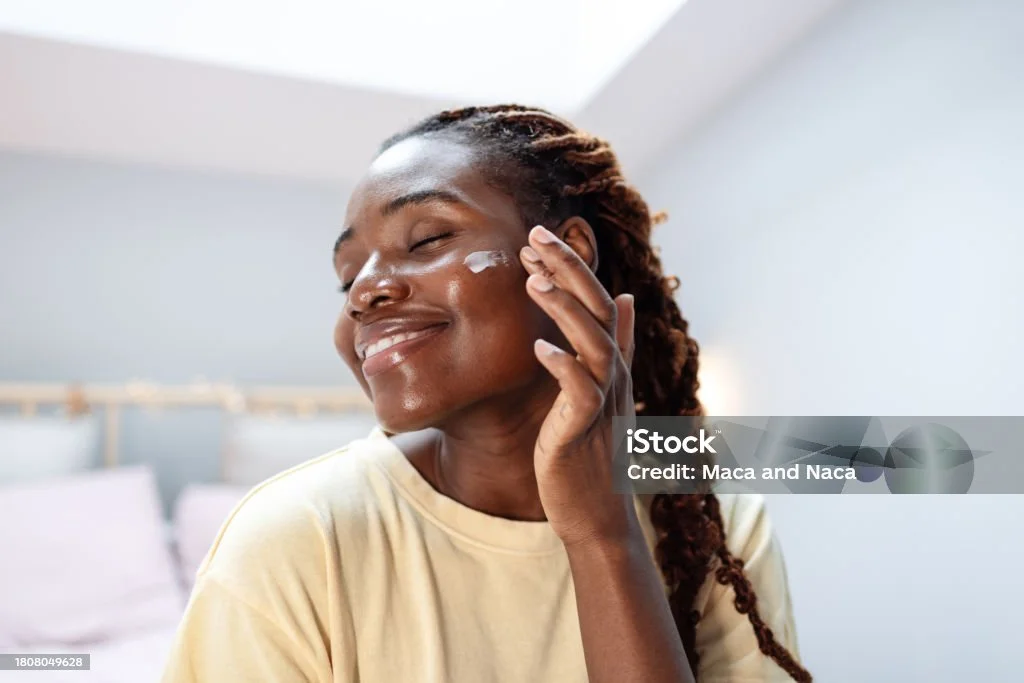
If your skin was fairly calm over the summer and suddenly started breaking out in September, sun and humidity might not be the only culprits. September in Atlanta means school schedules restart, work ramps back up after summer's slower pace, and for a lot of women in their 30s, 40s, and 50s juggling careers, kids, and aging parents, the mental load spikes right along with the calendar. Your skin feels it before you consciously register the stress — and for melanin-rich skin, stress-related breakouts come with an extra complication: the marks they leave behind.
The Cortisol-Skin Connection
When you're under sustained stress, your body produces more cortisol. Cortisol increases oil production, which can clog pores, and it also promotes inflammation — a combination that makes breakouts both more likely and, once they happen, more likely to leave a lasting mark on melanin-rich skin. This is different from hormonal acne tied to your menstrual cycle, though the two can absolutely compound each other, especially for clients in perimenopause navigating both hormonal shifts and life-stage stress simultaneously.
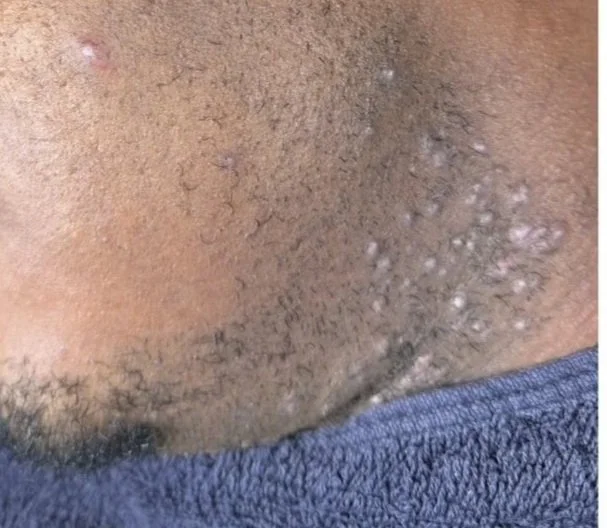
The frustrating part is that stress breakouts often show up in a specific pattern — along the jawline, chin, and sometimes the forehead — and because stress is rarely a single, identifiable event, it can feel harder to pin down than, say, a reaction to a new product or a hot, humid week.
Why This Matters More for Melanin-Rich Skin
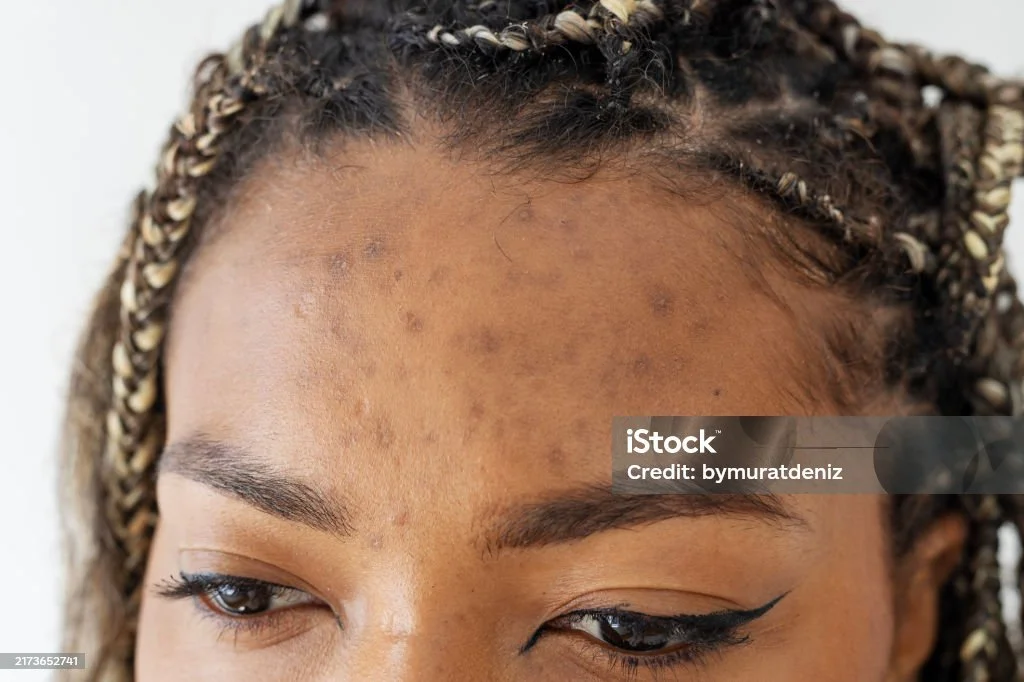
Every breakout carries a two-part cost for melanin-rich skin: the blemish itself, and the post-inflammatory hyperpigmentation it can leave behind, which often outlasts the breakout by months. That means a stressful September doesn't just mean a rough few weeks of skin — it can mean new dark marks you're still treating well into winter if the breakouts aren't managed early and gently.
Why Fall Is Prime Season for Chemical Peels on Melanin-Rich Skin
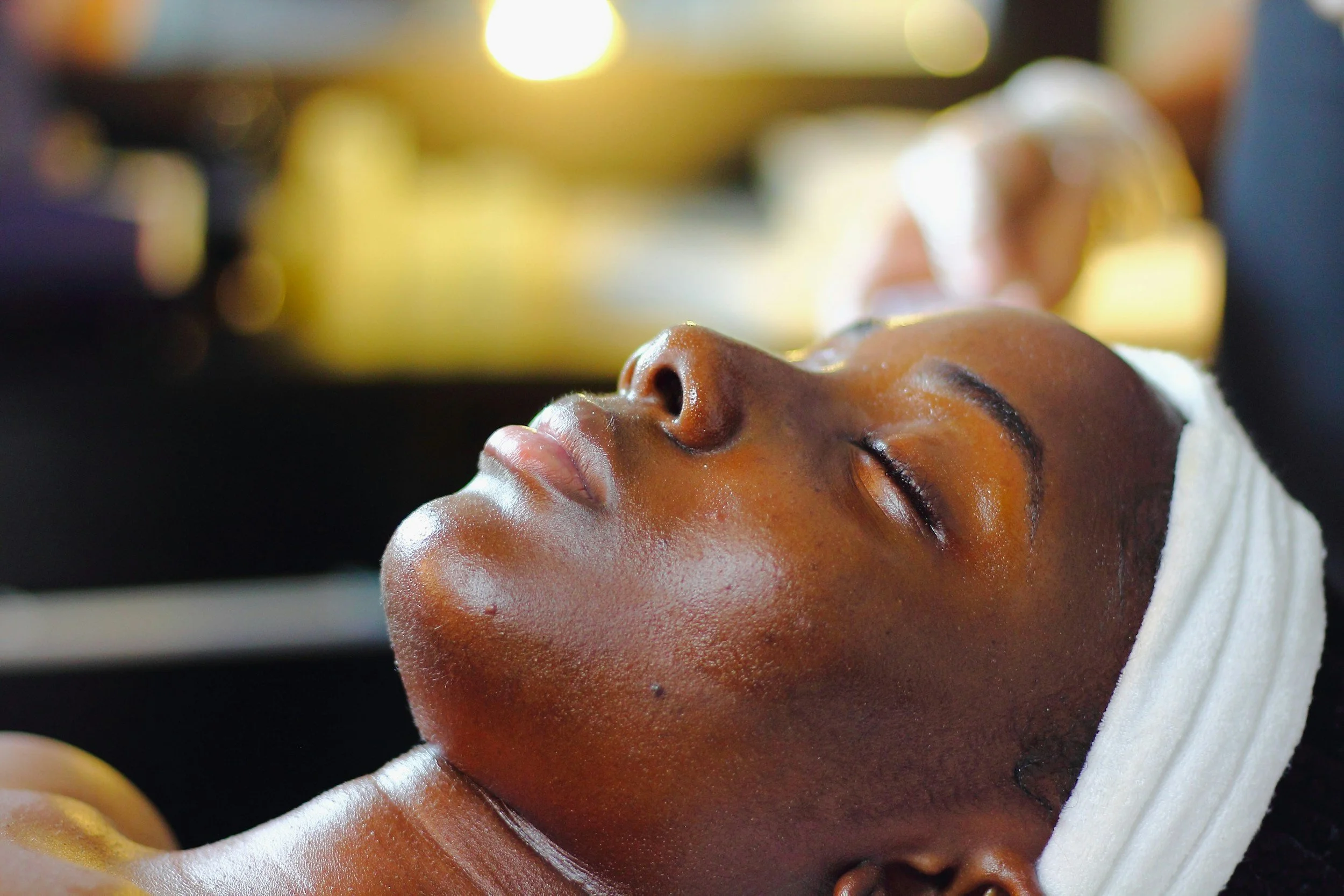
Why Fall Is Prime Season for Chemical Peels on Melanin-Rich Skin
If you've been putting off a chemical peel because you weren't sure it was “safe” for your skin tone, or you tried one years ago and ended up with more discoloration instead of less, timing was very likely part of the problem. Chemical peels are one of the most effective tools we have for melanin-rich skin — but they're also one of the most timing-sensitive, and fall is, hands down, the best season to do them.
The Core Issue: UV Exposure and Peeling Don't Mix
A chemical peel works by accelerating cell turnover, removing damaged surface layers to reveal fresher skin underneath and encourage more even pigment production over time. The trade-off is that freshly peeled skin is significantly more photosensitive for days to weeks afterward. For melanin-rich skin, that photosensitivity is a bigger deal than it is for lighter skin tones, because any UV exposure during that healing window can trigger new post-inflammatory hyperpigmentation — sometimes worse than what you were trying to treat in the first place.

The Fall Skincare Routine Reset: A Transition Guide for Women of Color in Atlanta
The Fall Skincare Routine Reset: A Transition Guide for Women of Color in Atlanta
Every September, we hear a version of the same question in our Tucker treatment room: “My skin did fine all summer, so why does it suddenly feel off?” The answer usually isn't that anything went wrong — it's that summer and fall ask two completely different things of melanin-rich skin, and most routines don't shift with the season.
Summer skincare in Atlanta is largely about damage control: managing sweat, oil, humidity-driven breakouts, and constant sun exposure. Fall is the opposite mode — repair, rebuilding, and reintroducing actives your skin couldn't tolerate in July's heat and humidity. If you're still running your summer routine in October, you're likely either under-treating (missing the best repair window of the year) or over-treating.

Post-Summer Skin Repair: Reversing Sun Damage on Melanin-Rich Skin
Post-Summer Skin Repair: Reversing Sun Damage on Melanin-Rich Skin
If you spent the summer months in and out of the Atlanta heat — poolside, on the Beltline, at cookouts, or just walking to your car on triple-digit heat index days — your skin has been working overtime. And if you have melanin-rich skin, “working overtime” often shows up in a very specific way: new dark spots, patches that look deeper than they did in May, and an overall unevenness that no amount of concealer quite covers.
Here's the part most people don't realize: the dark spots you're noticing in September aren't just from this week's sun exposure. Melanin production ramps up in response to UV and even visible light, but the visible pigment often takes weeks or months to fully surface. So what you're seeing now is really the accumulated record of an entire summer — every unprotected afternoon, every reapplication you skipped, every day the SPF wore off before you remembered to top it up.

The Balance Drip: IV Therapy for Hormonal Skin and Perimenopause | Tucker GA
The Radiance Drip: How IV Glutathione Fights Hyperpigmentation from the Inside Out
If you have melanin-rich skin, you already know that hyperpigmentation is one of the most persistent challenges in your skin journey. Dark spots from acne. Post-inflammatory pigmentation that lingers for months. Uneven skin tone that no serum seems to fully resolve. You try the right ingredients — vitamin C, niacinamide, kojic acid, azelaic acid — and you see improvement, but the ceiling is real.
That ceiling exists because topical products work on the surface. Hyperpigmentation, at its root, is a cellular process. And the most effective way to address a cellular process is from the inside.
That's what our Radiance Drip is designed to do.

The Radiance Drip: How IV Glutathione Fights Hyperpigmentation from the Inside Out
The Radiance Drip: How IV Glutathione Fights Hyperpigmentation from the Inside Out
If you have melanin-rich skin, you already know that hyperpigmentation is one of the most persistent challenges in your skin journey. Dark spots from acne. Post-inflammatory pigmentation that lingers for months. Uneven skin tone that no serum seems to fully resolve. You try the right ingredients — vitamin C, niacinamide, kojic acid, azelaic acid — and you see improvement, but the ceiling is real.
That ceiling exists because topical products work on the surface. Hyperpigmentation, at its root, is a cellular process. And the most effective way to address a cellular process is from the inside.
That's what our Radiance Drip is designed to do.

IV Infusion Therapy in Tucker, GA: What It Is, Who It's For, and Why Your Skin Will Thank You
IV Infusion Therapy in Tucker, GA: What It Is, Who It's For, and Why Your Skin Will Thank You
If you've been hearing more about IV therapy lately and wondering whether it's worth it — we're going to answer that question directly. Because at Crystal Ngozi Beauty & Esthetics, we don't add services because they're trending. We add them because the results justify it. And for our clients who struggle with persistent hyperpigmentation, hormonal skin, chronic fatigue, and dull complexion, IV Infusion Therapy has been one of the most meaningful additions to their skin wellness routine.
Here's everything you need to know.

Your Skincare Didn't Stop Working. Your Hormones Changed.
Your Skincare Didn't Stop Working. Your Hormones Changed.
We hear a version of this almost every week in our treatment room.
A client comes in — late 30s, 40s, early 50s — and she's frustrated. She built a routine that was working. She was consistent. She did the facials, used the products we recommended, wore her SPF. And then, gradually and then all at once, her skin stopped responding the way it used to.
"I feel like I'm doing everything right and nothing is working."
We understand why it feels that way. And we want to give you an honest answer about what's actually happening — because it changes what you need to do next.

Perimenopause and Hyperpigmentation: Why Your Dark Spots Got Worse — And What Actually Works
Perimenopause and Hyperpigmentation: Why Your Dark Spots Got Worse — And What Actually Works
You've been managing hyperpigmentation for years. You know your triggers. You wear your SPF. You've tried the vitamin C serums, the niacinamide, the kojic acid. And for a while, it was working. Then your 40s arrived — and something shifted.
The dark spots came back darker. New ones appeared where there weren't any before. Post-acne marks that used to fade in six weeks are hanging around for six months. Your skin looks uneven in a way that feels different from what you were managing before.
Here is the thing: your routine probably didn't fail you. Your hormones changed.

Why Your Skin Is Changing in Your 40s: A Perimenopause Skin Guide for Women of Color
Why Your Skin Is Changing in Your 40s: A Perimenopause Skin Guide for Women of Color
You did everything right. You built a skincare routine. You stayed consistent. You came in for your facials. And then, somewhere in your 40s, your skin started behaving in ways it never had before. Breakouts you hadn't seen since your 20s. Dryness that crept in even though you've always had oily skin. Dark spots that weren't there six months ago. A dullness that concealer can't fix.
This is not your routine failing you. This is perimenopause — and it hits differently on melanin-rich skin.




Ready for Clear, Confident Skin?
Book your in-person or virtual skin consultation today.
Serving Tucker, Atlanta, and clients nationwide.